Tell The Story
There are close to zero Americans alive today who weren't instructed to "look both ways before crossing the street." We learned it early in life, even before "don't run with scissors." An ageless and immutable directive.
If you're reading this, though, there's a good chance you know where "look both ways" came from. You might have read Fighting Traffic by Peter Norton or watched Taken For A Ride. Ageless? Immutable? Not really. “Look both ways” started with the unbearable number of kids killed by cars as the cars began to occupy more and more space on the streets in the 1920s. Once the domain of all people using all modes, this new conflict in the streets generated backlash against cars and threatened their adoption in cities. That's where an organized marketing, lobbying, and PR effort by automotive companies and interest groups in the 1920s, 30s, and 40s took over, shifting the burden of safety from automobile drivers to pedestrians.
Fair to say this worked out pretty well for the industry.
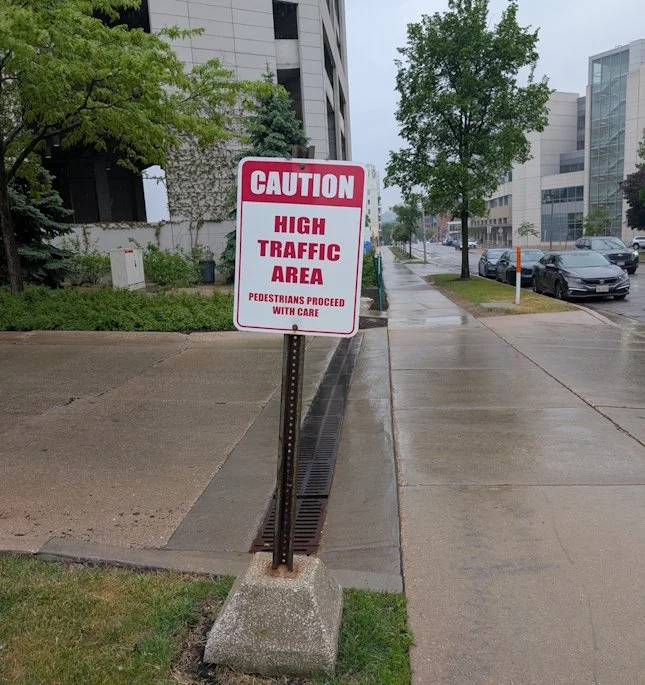
So here we are in 2026, standing near the Milwaukee Catholic Home on Prospect Ave, in front of a completely unremarkable sign that anybody might pass without a second thought. You could argue the person on foot, bicycle, or wheelchair doesn’t need the reminder. “Head on a swivel” is the default setting.
To be sure, whoever put the sign here had the best intentions, but it’s also one small reminder of how well the industry separated itself from the burden it imposed. There’s no such reminder shown to the person in charge of 4000 pounds of rolling metal and plastic other than the small, faded, and oddly placed STOP sign about 20 feet up the driveway from the sidewalk.
So this is your story to tell. And maybe it ends up being an insignificant aside to the friend or family member with you. But you see this once and you start seeing it everywhere, so - just maybe - they'll pick it up too. Maybe they’ll tell their friends.
After eight or nine decades, word is getting around.